Nature-based Solutions (NbS) is a framework grounded in the sustainable management, use and imitation of nature. NbS are innovative and efficient solutions to issues such as climate change mitigation and adaption, food and water security, human health or disaster risk reduction; and directly address global challenges connected to the SDGs. NbS for water security can range from green infrastructure investments in the form of artificial wetlands to improved management practices of river basins.
The term NbS first emerged on the global stage during the UNFCCC negotiations in 2009 and has since increasingly gained attention. NbS covers a wide range of practices including for example integrated water resource management, forest landscape restoration, ecosystem-based adaptation and mitigation, and ecosystem-based disaster risk reduction. A widely used definition of NbS is that they are actions to protect, sustainable manage and restore natural or modified ecosystems, that address societal challenges effectively and adaptively, simultaneously providing human well-being and biodiversity benefits. Solutions often enhance existing natural or man-made infrastructure and spur long-term economic, social and environmental benefits.
NbS that contribute to water security can vary widely and have multiple benefits. They can improve water availability and water quality, whilst simultaneously reducing water-related risks and generating additional social, economic and environmental co-benefits. Examples of the types of water-related NbS include: source water protection; wetlands restoration, protection, and construction; water harvesting; agricultural best management practices; soil conservation; afforestation; protecting mangroves
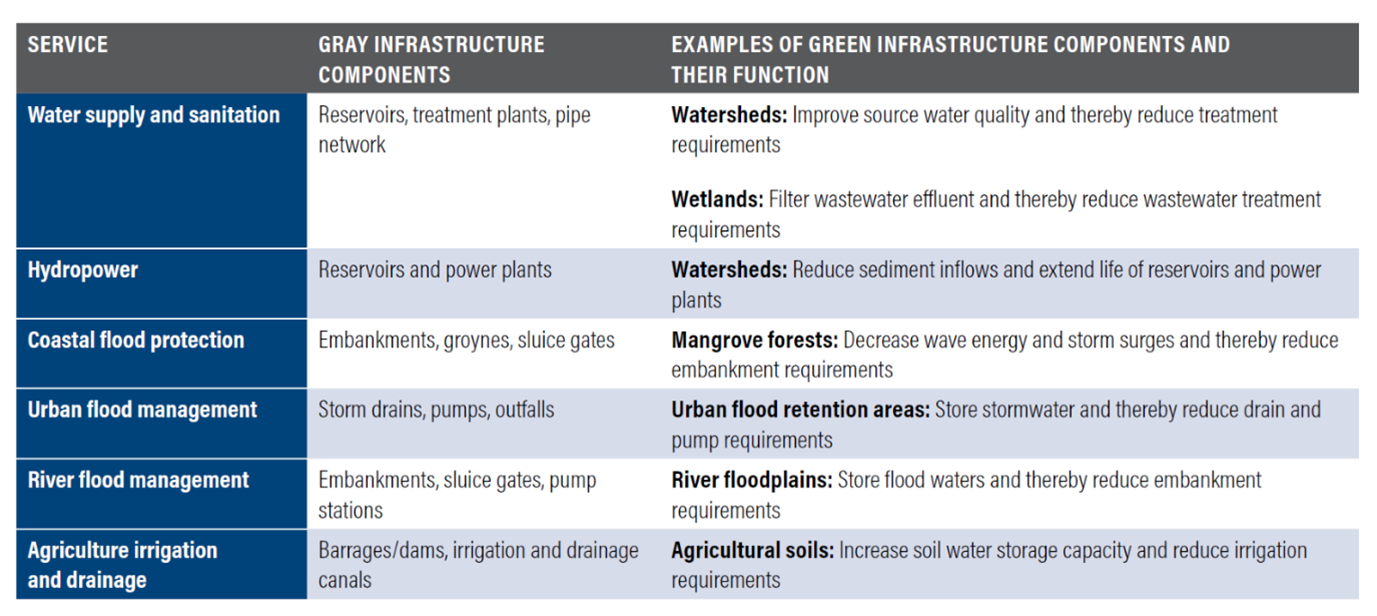
The terminology ‘green infrastructure’ is also often used in relation to NbS, and is a subset of NbS. Green infrastructure for water refers to the natural or semi-natural systems that provide water resources management options with benefits that are equivalent or similar to conventional grey (built/physical) water infrastructure (World Water Development Report, 2018).